

Utilization tells you whether your people are busy. Realization tells you whether being busy turned into money. Most professional services firms measure the first carefully and the second only at the point where nothing can be done about it.
What realization rate actually measures
Realization is the gap between the work your firm performed and the fees it ultimately collected for that work. It is easiest to reason about as four numbers that should be close together and usually are not:
- Hours worked. What the team actually spent on client work
- Hours logged. What made it into a timesheet
- Hours billed. What appeared on an invoice
- Hours paid. What the client actually settled
Realization rate is usually expressed as hours billed divided by hours worked, at standard rates. A firm at 85% realization is giving away roughly one day in seven. On a team of 40 people, that is comfortably a seven-figure annual number at most day rates.
The number itself is not the useful part. What matters is knowing which of the gaps is producing it, because each gap has a different fix.
Leak one: hours worked that never get logged
The most common leak, and the least discussed. Someone spends two hours on a client call on Thursday, logs their week on the following Wednesday, and remembers a day and a half of it. The missing time is not disputed or written off. It simply never existed in your system.
What to look for: the average gap between the date work is performed and the date it is logged. If that gap is over three days across your firm, you have this leak and it is larger than you think.
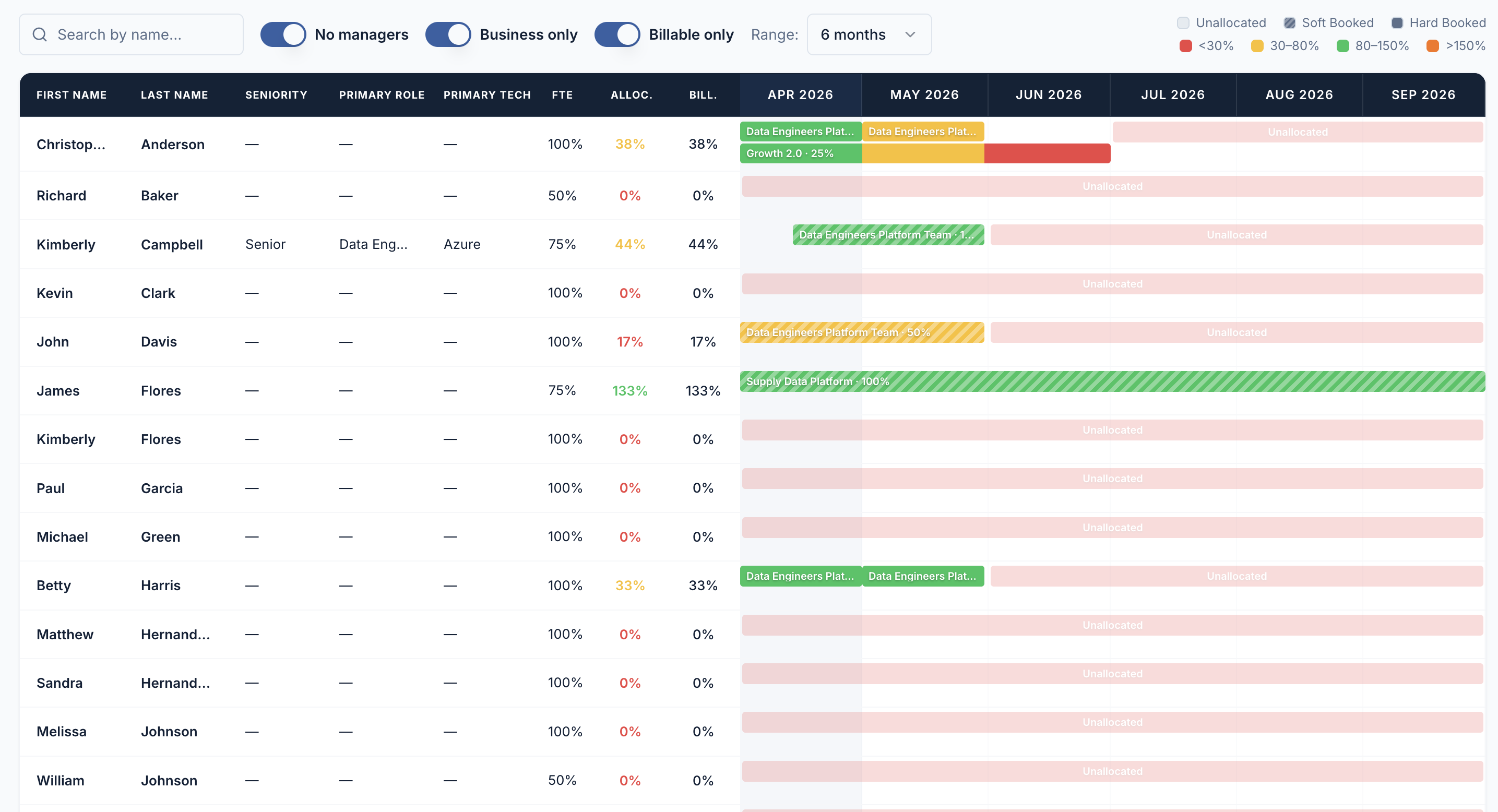
What fixes it: not reminders. Reducing the effort of logging. Pre-filled timesheets built from current allocations, pulling hours already recorded in Jira, and copying last week's structure for people on long-running engagements all shrink the task to the point where it gets done on the day.
Leak two: work performed outside the scope you sold
The client asks for something adjacent, the team says yes because saying no feels transactional, and nothing is repriced. On a time and materials engagement this is often fine and billable. On fixed price or a retainer it is pure realization loss.
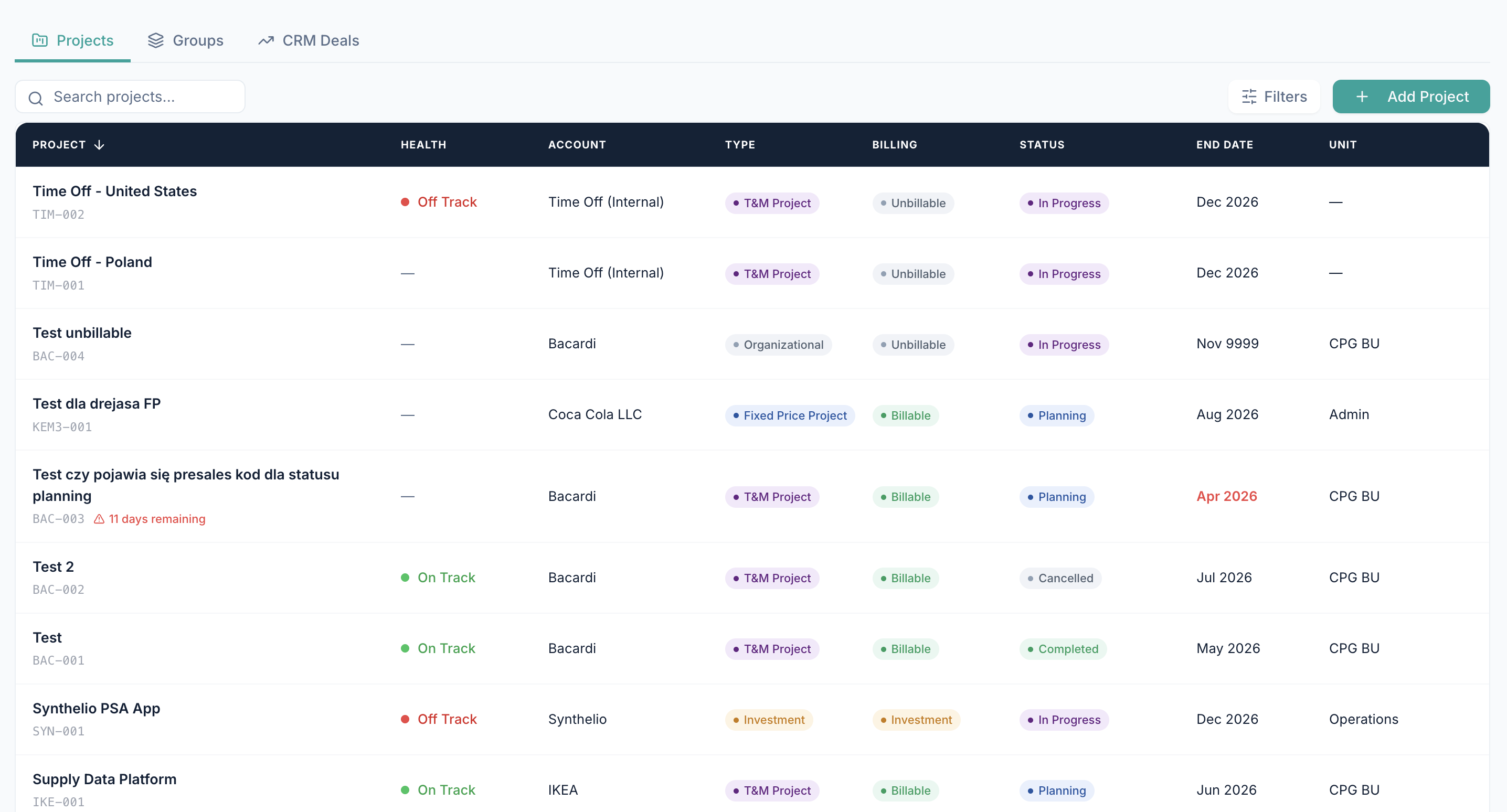
What to look for: effort on an engagement running ahead of the plan while the contract value stays flat. This is only visible if you are tracking project margin during delivery rather than at month end.
What fixes it: a low-friction change request path and a delivery lead who sees burn against contract weekly. Most over-servicing is not a commercial decision anyone made. It is a commercial decision nobody noticed making.
Leak three: over-servicing a retainer
A distinct version of the same problem, and the defining leak for agencies and firms on monthly retainers. The retainer covers 80 hours. Some months the team delivers 95, and because the fee is fixed, nothing in the billing process ever flags it.
What to look for: logged hours against retainer entitlement, per client, per month. Three consecutive months over entitlement is not a busy patch. It is an underpriced contract.
What fixes it: tracking entitlement as a number the system knows about, so consumption is visible mid-month rather than inferred at renewal. Agencies tend to find this is their single largest leak.
Leak four: PO coverage running out
The work is in scope, the rate is agreed, and the Purchase Order backing it was exhausted three weeks ago. The team keeps delivering, the invoice gets rejected by the client's accounts payable, and the recovery conversation starts from a weak position.
What to look for: invoiced and committed value against PO value on every active engagement, with a threshold alert well before exhaustion.
What fixes it: holding Purchase Orders as structured records linked to their Statement of Work, with consumption tracked automatically. A PO in an email thread cannot warn you about anything.
Leak five: milestones delivered but not flagged
On milestone-billed engagements, delivery knows a milestone landed and accounting does not. The invoice goes out in the next cycle, or the one after. Nothing is written off here, but the cash arrives weeks late and, near a period end, in the wrong quarter entirely.
What to look for: the average delay between a milestone being met and its invoice being raised. Anything beyond a few days points to a handoff problem, not a finance problem.
What fixes it: putting billing milestones in the same system delivery already works in, so marking one complete is what triggers the invoice rather than an email that someone has to remember to send.
Leak six: write-offs at invoice review
The classic realization leak, and the only one most firms actually measure. A partner reviews the draft invoice, decides the client will object to eleven hours, and removes them.
Sometimes that is the right commercial call. The problem is when it is habitual and unexamined. Write-offs concentrated on particular clients, particular engagement types, or particular people are a pricing signal, not a billing detail.
What to look for: write-off value by client, by engagement type, and by the person who approved it, reviewed quarterly.
What fixes it: treating each write-off as a data point about scoping and pricing rather than as an unavoidable cost of client service.
Leak seven: rate erosion nobody reversed
A discount granted to win a client in year one is still being applied in year four. The rate card moved twice; this engagement did not. It is a quiet leak because everything about it looks correct in the invoice.
What to look for: effective rate per client compared to your current standard rate card, sorted by the largest negative gap.
What fixes it: an annual rate review with the gap in front of you, and rates held as structured contract data so the comparison takes a minute rather than a week.
The quarterly realization review
Once a quarter, walk the seven leaks in order for your ten largest clients. For each one, record whether the gap is present, its approximate value, and who owns closing it. The exercise usually takes an afternoon and typically surfaces one or two leaks that were larger than anyone assumed.
The firms that hold realization above 90% are rarely tougher negotiators. They are firms where the gaps are visible early enough to be worth a conversation.
Make the gaps visible
Synthelio connects contracts, allocations, approved time, and invoices in one system, so realization gaps show up during delivery instead of at close. See how it works for consulting firms, accounting firms, and law firms, or start free with unlimited time tracking for your whole team.