
Most professional services firms run resource planning in one direction only: a deal closes, someone forwards the signed Statement of Work to delivery, and the scramble to find people begins. It works, in the sense that the work eventually gets staffed. It also guarantees the two outcomes every services leader says they want to avoid, and it produces them in alternating order.
The cycle every services firm recognizes
Three deals close in the same fortnight. Delivery has nobody free, so the firm subcontracts at a poor rate, pulls people off an internal initiative, or asks the team to absorb it. Margin on all three engagements is compromised before the kickoff call.
Six weeks later the pipeline is thin, two engagements have ended, and eleven people are on the bench. The firm now has capacity it cannot sell and a cost base it cannot pause. Nothing went wrong in either month individually. What went wrong is that resource planning only ever started after the contract was signed.
Why post-signature staffing is always late
The lead time on delivery capacity is longer than the lead time on a signature, and the gap is bigger than most firms account for.
- A senior consultant with the right domain background may already be committed for eight weeks
- Hiring for a specific skill takes two to four months in most markets
- Subcontractors need lead time to be worth their rate, and cost more when they do not have it
- People rolling off an engagement need their next assignment planned before, not after, the end date
If planning starts the day a deal is marked Closed Won, none of those levers are available. You are choosing from whoever happens to be free, which is a very different thing from choosing the right team.
Plan against weighted pipeline, not signed contracts
The fix is to bring the pipeline into resource planning while the deals are still open, and to be honest about probability rather than pretending every opportunity will land.
Log demand, not just revenue
Most firms already forecast pipeline in money. Very few forecast it in people. Every opportunity above a certain size should carry an estimated shape: how many people, at what seniority, with which skills, starting roughly when, for roughly how long. Sales does not need to get this perfect. A rough shape entered early beats an exact shape entered late.
Weight the demand the same way you weight the revenue
If a deal sits at 60% probability, it represents 60% of its staffing demand for planning purposes. Aggregate that across the pipeline and you get a forward demand curve you can compare against your available capacity. Where the curve crosses your capacity line, you have a decision to make, and you have it weeks earlier than you otherwise would.
Keep soft bookings visibly separate
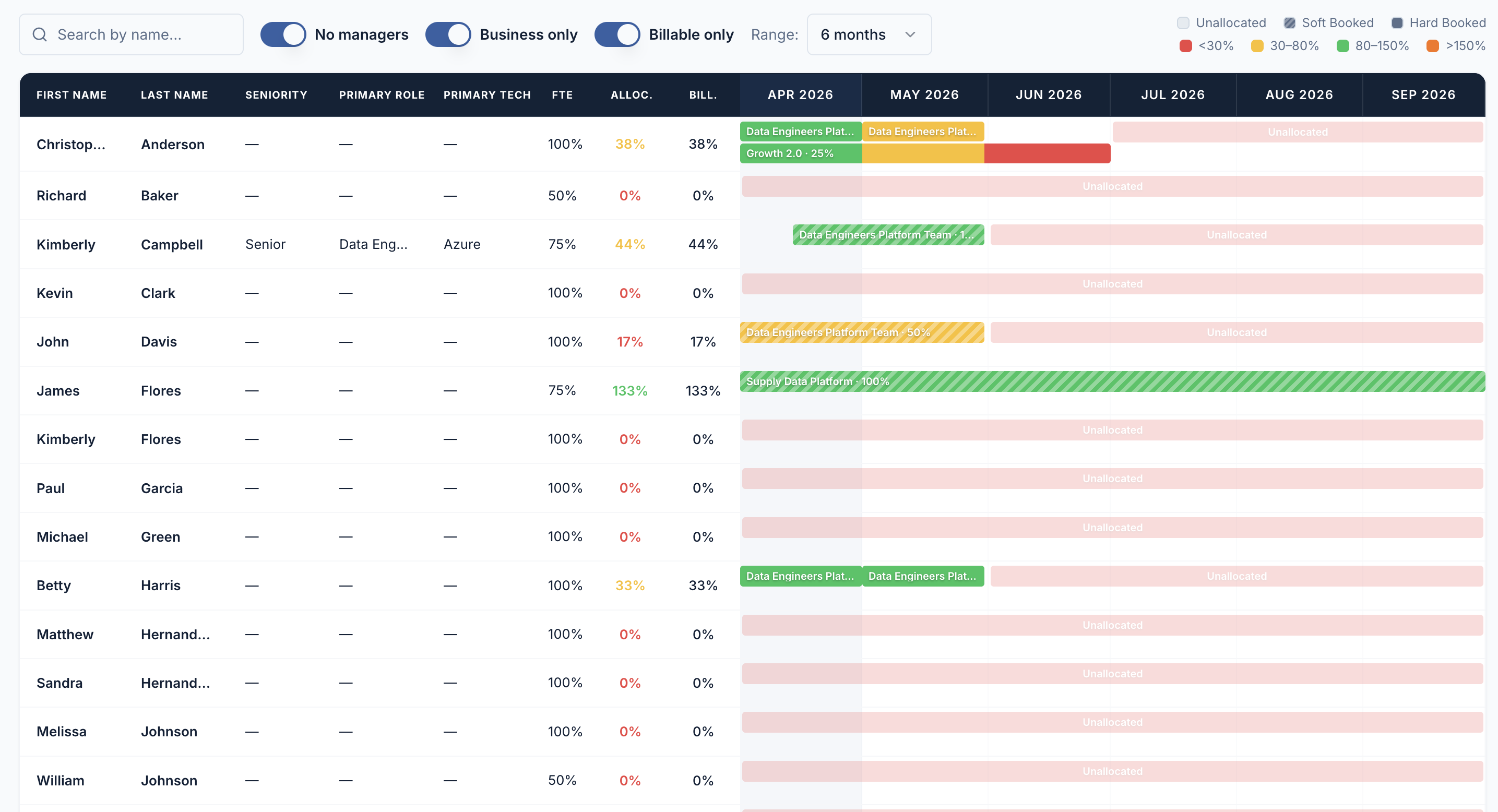
This is the discipline that makes the whole approach safe. A soft booking against an unsigned deal must never look like a confirmed allocation. If a delivery lead cannot tell at a glance whether someone is genuinely committed or provisionally pencilled in, the forward plan becomes untrustworthy within a month and people stop using it.
Soft bookings should carry the deal they came from, its probability, and an expiry. When the deal slips or dies, the booking releases automatically rather than quietly holding capacity that nobody is using.
What the forward view should tell you
A working pipeline-aware resource plan answers four questions on any given Monday:
- Where is the crunch? Which weeks in the next quarter have more weighted demand than capacity, and for which roles
- Where is the trough? Which weeks have capacity that nothing is pointing at yet
- Who rolls off when? Every person whose engagement ends in the next 60 days, and whether they have a named next assignment
- What is at risk? Which deals, if they land, cannot currently be staffed with the people you have
That fourth question is the one that changes commercial behavior. Knowing three months out that a probable deal has no team behind it lets you start recruiting, line up a subcontractor at a sensible rate, or have an honest conversation with the client about a start date. Discovering it after signature leaves you with none of those options.
Getting sales and delivery to use the same picture
The reason most firms do not do this is not that the idea is unfamiliar. It is that the pipeline lives in the CRM and the resource plan lives in a spreadsheet, and nobody wants to maintain both.
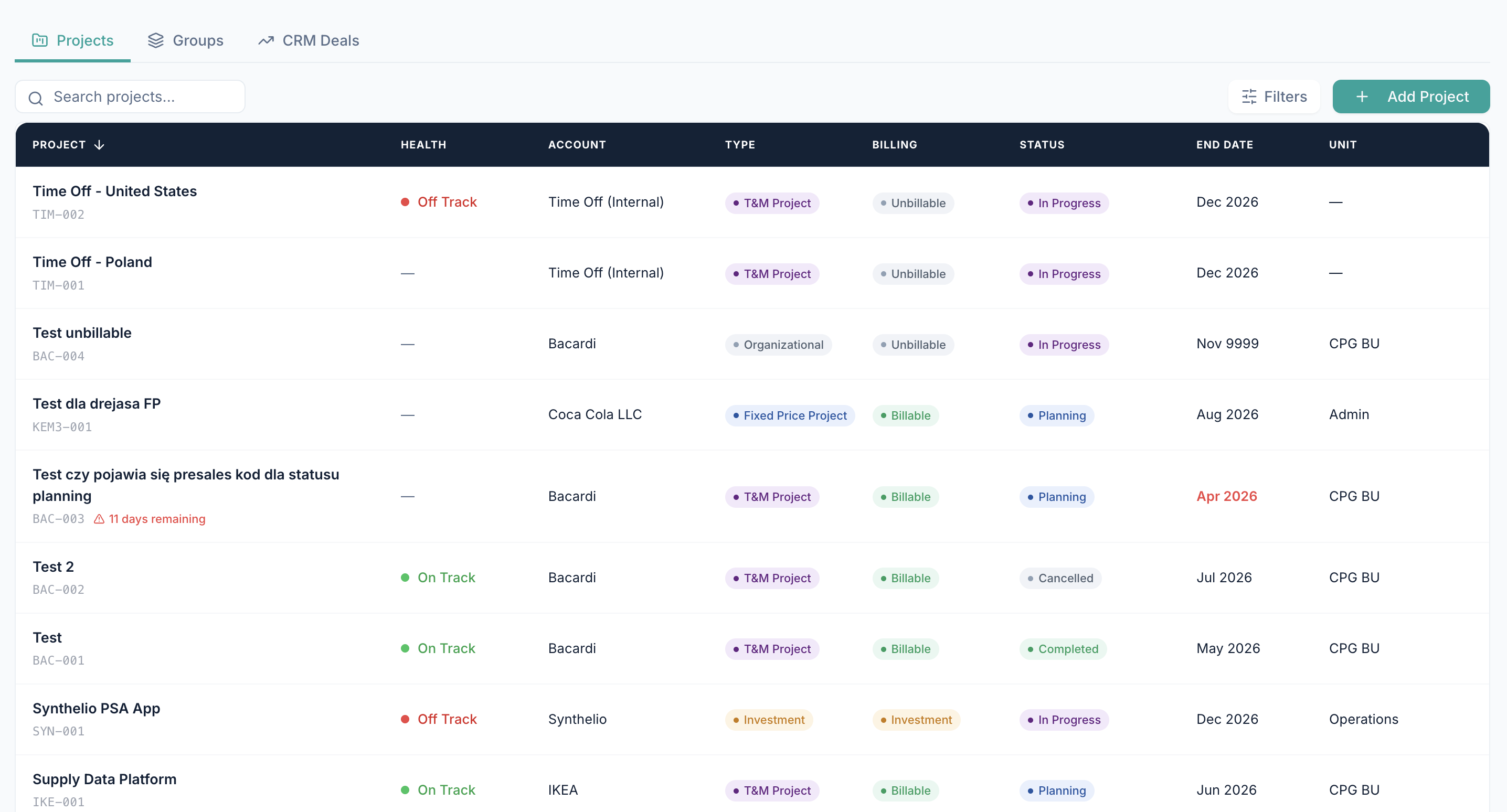
That is a systems problem more than a process problem. When the CRM pipeline and the delivery plan share one dataset, a deal moving from 40% to 70% updates the forward demand curve without anyone re-keying anything, and a Closed Won deal becomes a staffed project rather than an email to the delivery lead.
Two small habits make it stick:
- Add the staffing shape at qualification, not at proposal. Three fields (roles, rough FTE, likely start) are enough, and they are easiest to capture while the conversation is fresh
- Review demand and capacity in the same meeting. If the pipeline review and the resourcing review are separate meetings with separate attendees, the two numbers will never be reconciled
What good looks like after a quarter
Firms that move to pipeline-aware resource planning tend to report the same set of changes. Bench time falls, because roll-offs are planned against likely work rather than discovered. Subcontractor costs fall, because engagements are covered with notice instead of urgency. Start dates get more realistic, because delivery is in the conversation before the client is given a date. And hiring gets calmer, because the decision is made against a demand curve rather than against the panic of a specific week.
None of that requires forecasting the pipeline perfectly. It only requires planning against it at all.
Where to start
Pick your open deals above a threshold that matters to your firm, add a rough staffing shape to each, and lay the weighted demand over your current allocations for the next 90 days. The first version will be crude and it will still show you something you did not know.
Synthelio keeps pipeline, allocations, and delivery in one system, with soft bookings held separately from confirmed work so the forward view stays honest. Start free, see how it works for consulting firms and IT services teams, or read next on what one point of billable utilization is worth.