

Ask a services firm how a given project is performing and you will usually get one of two answers. The optimistic one is a delivery manager's instinct. The precise one arrives at month-end close, several weeks after the period it describes. Neither of them helps you while the project is still running.
The seven week problem
Consider a typical fixed-price engagement. Scope drifts in week three: the client asks for an extra integration, the team says yes because the relationship matters, and nobody reprices anything. The project is now consuming more effort than it was sold for.
Here is how long it takes the firm to find out.
- Week three: the extra work starts
- Week four: timesheets for week three are submitted, some of them late
- Week five: managers approve the outstanding timesheets
- Week six: the month closes and finance begins the close process
- Week seven: the management pack lands and the project margin is visible
Four weeks of effort at the wrong burn rate, discovered a month after it started. By the time anyone sees the number, the money is spent, the relationship conversation is much harder, and the only lever left is to absorb it.
Month-end close is an accounting cadence. Delivery runs on a weekly cadence. Managing project margin from the accounting cadence means acting one full cycle behind the thing you are managing.
Why the number is late in the first place
Project margin is not a hard calculation. It is revenue on an engagement minus the cost of the people delivering it. What makes it late in most firms is that the three inputs sit in three different places.
Revenue lives in the contract
The rate card, the fixed price, the billing milestones, and the currency all live in the Statement of Work, which is often a PDF in a shared drive. Nobody can compute revenue recognition automatically from a PDF, so someone rebuilds it in a spreadsheet once a month.
Cost lives in HR and payroll
What a person actually costs, whether that is a salary converted to a day rate or a contractor rate, is usually held somewhere finance controls and delivery cannot see. So delivery uses a blended average cost, which is close enough to be believable and wrong enough to hide the specific projects that are in trouble.
Effort lives in timesheets
And timesheets are late. Not maliciously, just structurally: people log time when they are reminded, approvals happen when a manager has a spare hour, and the data only becomes trustworthy at the point where it is also stale.
What real-time project margin actually requires
Firms often try to solve this with better reporting on top of the same fragmented data. That produces a faster version of the same lag. The three changes that actually move the number earlier are structural.
1. Per-person cost, not a blended rate
A blended cost rate averages away exactly the signal you need. An engagement staffed with three seniors and a lead has a very different cost profile from one staffed with two juniors and a lead, and a blended rate reports them as similar. Cost has to sit on the person record, alongside their role and contract, and flow into the project calculation automatically.
2. Contract terms as structured data
Rates, billing type, milestones, currency, and PO coverage need to be fields in a system rather than clauses in a document. Once the Statement of Work is structured, revenue recognition becomes a calculation instead of a monthly reconstruction, and it can run daily without anyone touching it.
3. Time captured close to when it happens
This is the input most firms give up on, usually after several rounds of nagging. Nagging does not work. Reducing the effort does. Pre-filled timesheets built from current allocations, a one-click pull of hours already logged in Jira, and copying last week's structure for people on long-running work all turn a fifteen minute chore into a one minute one. Compliance follows convenience.
When those three are in place, project margin updates as work is logged and approved, not as the month is closed.
What changes when margin is current
The value is not a better report. It is the set of decisions that become possible while they are still cheap.
- Scope creep gets priced in week three, not absorbed in week seven. A change request raised while the work is being requested is a normal commercial conversation. The same conversation a month later is a dispute
- Staffing mix gets corrected mid-engagement. If margin is thin because the team is too senior for the work, that is fixable in week four and academic in week ten
- Fixed-price bids get better. Real margin outcomes by project type become an estimating input rather than a post-mortem
- Underwater projects surface individually. In a portfolio view, one bad engagement is easily masked by three good ones until the quarter closes
The rollup nobody can produce
There is a second cost to late margin data that shows up at the leadership level. If project margin is reconstructed monthly by hand, then account-level, unit-level, and firm-level margin are all reconstructed monthly by hand too.
That means simple questions take days to answer. Which client is actually our most profitable, once delivery cost is counted? Which business unit is carrying the others? Are fixed-price engagements outperforming time and materials, or does it just feel that way? These are not exotic analyses. They are unanswerable in most firms simply because the underlying margin is a spreadsheet exercise rather than a live figure that rolls up.
A reasonable target
You do not need margin to update by the hour. A realistic and genuinely useful target for a services firm is this: every project manager can open their engagement on any given day and see revenue to date, cost to date, and margin, based on time approved within the last week.
That single change moves the discovery of a problem from seven weeks to roughly one. On a fixed-price engagement, six weeks of earlier warning is usually the difference between a repriced scope and a written-off quarter.
See your real margin
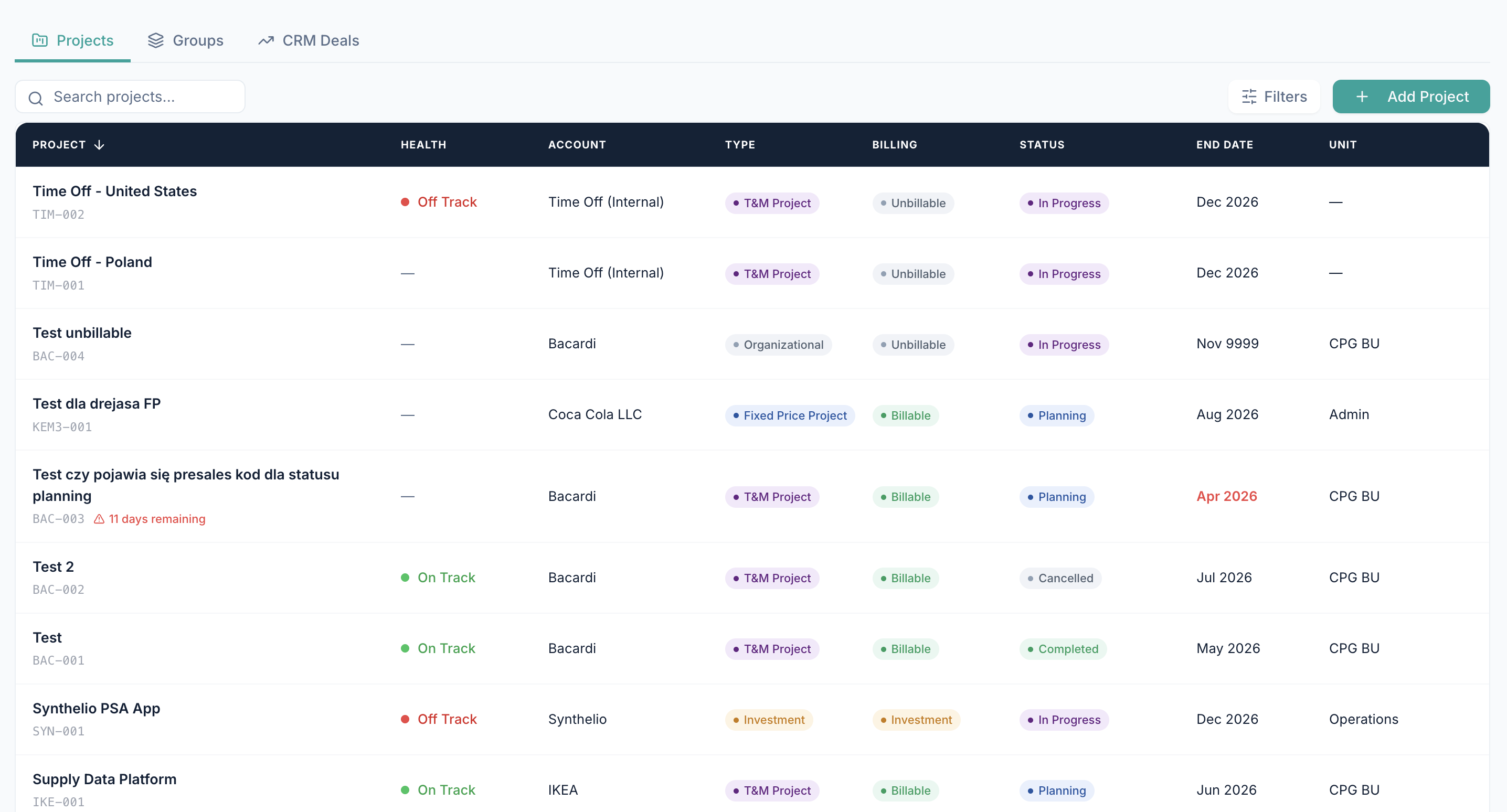
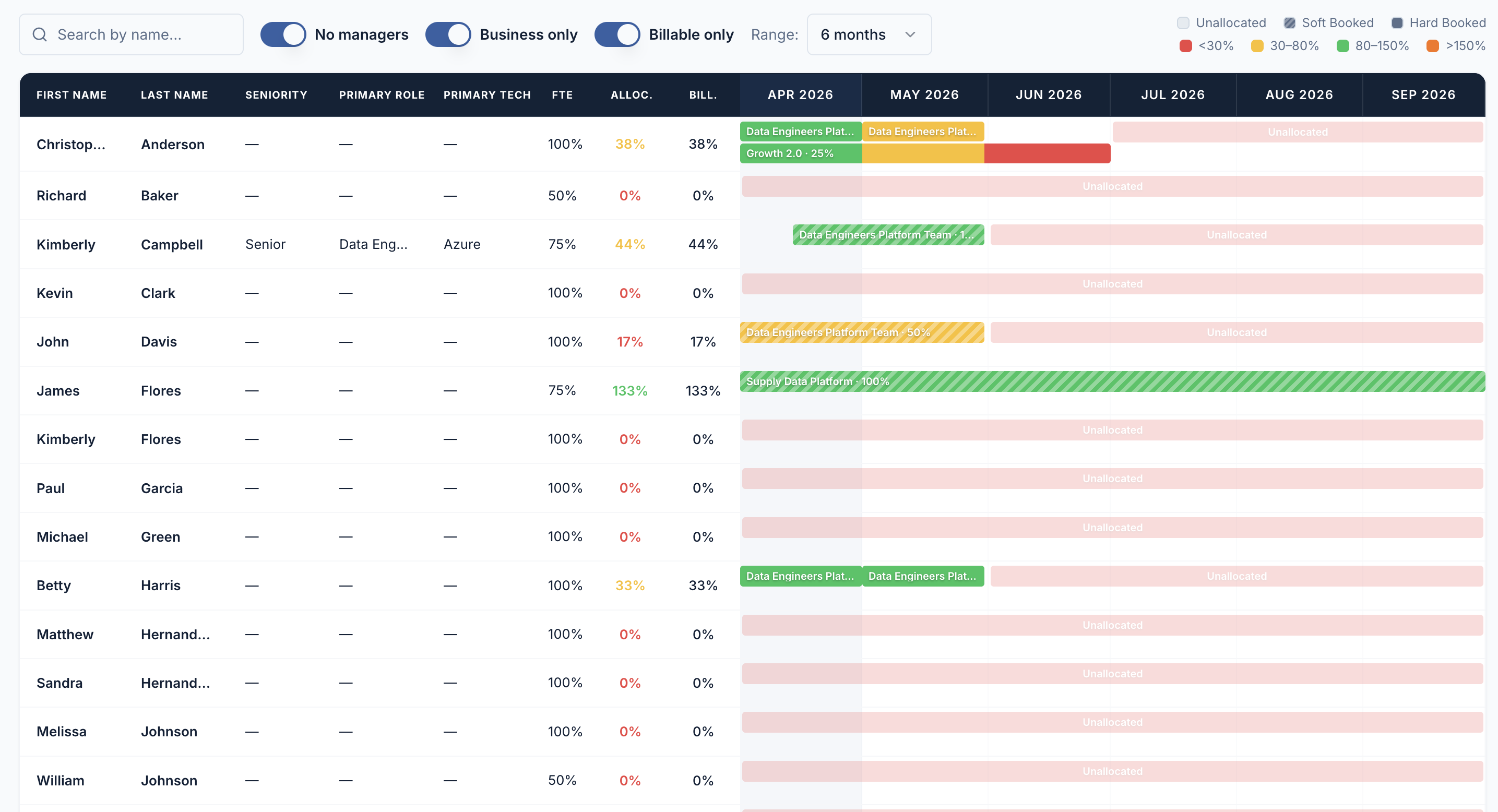
Synthelio calculates revenue, cost, and margin per engagement from live allocations, approved time, and structured contract terms, then rolls it up across accounts, business units, and the whole company. Start free, or read next on where realization leaks between hours worked and hours paid.